Blue Ocean Wave Backgrounds Vector
A Calm, Confident First Impression—Not Just Another Blue Print
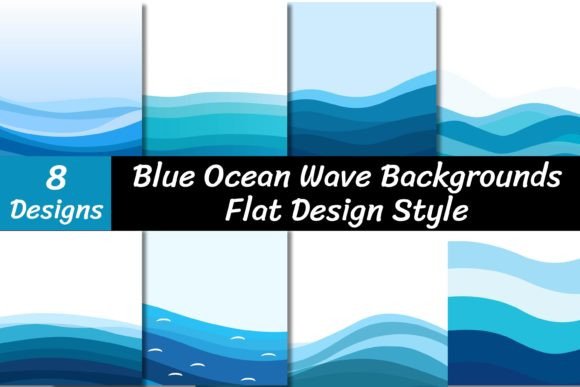
Opening Blue Ocean Wave Backgrounds Vector feels like stepping onto a sun-warmed dock at low tide—clean, quiet, and full of subtle motion. It’s not a photorealistic wave crash or a busy nautical motif. Instead, it’s a flat-design abstraction: fluid curves layered in soft gradients of cerulean, slate, and seafoam, with generous negative space and intentional rhythm. As an embroidery designer who’s stitched everything from baby onesies to boutique aprons, I immediately saw its potential—not as a standalone focal point, but as a grounded, breathable backdrop that lets other elements shine.
Where This Background Actually Belongs in Real Embroidery Work
Last week, I used Blue Ocean Wave Backgrounds Vector as the base for a custom embroidered tote bag destined for a coastal-themed baby shower gift. The client wanted “calm but not boring”—no anchors, no seashells, no clichés. We scaled the vector down to fit a 4” × 6” hoop area on the front pocket, then overlaid a delicate monogram in satin stitch. The result? A finished product that felt intentional, serene, and quietly luxurious. That’s where this design excels: on sweatshirt backs (not too busy), pillow covers (soft contrast against linen), tea towels (where flow mimics water absorption), and nursery wall hangings (gentle enough for naptime). It also translates beautifully into digital embroidery files for Etsy sellers building cohesive collections—think matching baby caps, bibs, and blanket corners all sharing the same understated wave motif.
What Holds Up—and What Needs Thought—Under Needle and Thread
Because Blue Ocean Wave Backgrounds Vector is built with clean vectors and moderate detail, it scales well across hoop sizes—but don’t assume it’s foolproof for every surface. On stretchy fabric like cotton jersey or lightweight knits, those long, sweeping curves can distort if stabilizer isn’t matched precisely. I recommend medium-weight cutaway for sweatshirts, tear-away for stable woven cottons like tea towels, and a light mesh for baby onesies. Also, avoid using it full-size on curved surfaces like baseball caps—the outer edges of the wave shapes tend to pull or pucker without careful digitizing adjustments.
Small hoop sizes (under 3”) are tricky. The original file includes smooth lines and gentle tapering, but when shrunk below 2.5”, some of the subtlety blurs in fill stitch. If you’re planning an embroidered patch or cap front, test the design at your target size first—and consider simplifying one or two layers manually before digitizing. Likewise, dense stitch areas (like overlapping wave crests) may need reduced stitch density to prevent stiffness or thread breakage on thin fabrics.
How It Shapes Perception—From Handmade Charm to Buyer Trust
Customers notice intentionality. When someone sees a well-executed Blue Ocean Wave Backgrounds Vector on a handmade apron—balanced, uncluttered, harmonizing with thread color and fabric texture—they read it as thoughtful craftsmanship, not filler. That builds trust. For Etsy sellers, that means higher perceived value, better photo mockups (it renders cleanly in printable mockups), and stronger brand consistency across listings. I’ve seen buyers comment specifically on “the calm blue background” in reviews—not because it’s flashy, but because it signals care in curation.
That said, it doesn’t suit every product. Avoid pairing it with highly detailed applique designs or tiny lettering—it competes rather than complements. And while it works on dark fabric (especially with tonal thread), avoid very light blues on white cotton unless you want near-invisibility. Always test in black-and-white mockups first to confirm contrast and clarity.
Practical Designer Notes Before You Stitch or Sell
- Test on scrap fabric first—especially if stitching on textured weaves like canvas or terry cloth, where wave contours can catch unevenly.
- Check thread color contrast carefully: This design thrives on tonal harmony, but low-contrast combos (e.g., pale blue thread on light denim) can vanish post-stitching.
- Review stitch density before finalizing—flat vector curves often digitize with heavier fill than needed; trimming density by 10–15% improves drape and reduces thread waste.
- Confirm hoop size compatibility for your intended use—while the vector itself is 6000 × 4000 px, your embroidery file will depend on how it’s digitized and scaled.
- Inspect small details at actual stitch size: subtle wave breaks or tapered ends may need manual cleanup for crispness in satin or running stitch borders.
- Use proper stabilizer—this background’s flow relies on stability; skipping it leads to wobbly lines and loss of rhythm.
- Verify licensing terms before selling finished products or bundling as part of a commercial embroidery kit—Blue Ocean Wave Backgrounds Vector is a Graphics asset, so check whether personal or extended use applies to your craft business model.
Final Thought: A Quiet Anchor for Your Creative Work
Blue Ocean Wave Backgrounds Vector won’t shout. It won’t trend-jack or over-deliver visual noise. What it does—consistently—is support. It grounds personalized gifts without overwhelming them, elevates small shop merchandise with quiet confidence, and gives embroidery designers a reliable, mood-aligned foundation they can adapt across apparel, home goods, and digital product previews. Whether you’re prepping for a craft fair, building an Etsy collection, or stitching a one-of-a-kind holiday gift, this background earns its place not through flash, but through thoughtful, stitch-ready calm.